Digital marketing is changing faster than ever. New AI features, automation, and smarter analytics have completely transformed how businesses connect with customers. Whether you’re a student, freelancer, business owner, or marketing professional, using the right digital marketing tools can save time, improve results, and make your work much easier. From content creation and SEO to advertising and analytics, these digital marketing tools help streamline your workflow, boost productivity, and deliver better marketing performance.
The good news? You don’t need dozens of tools. In fact, mastering just a few powerful platforms can help you handle most digital marketing tasks efficiently.
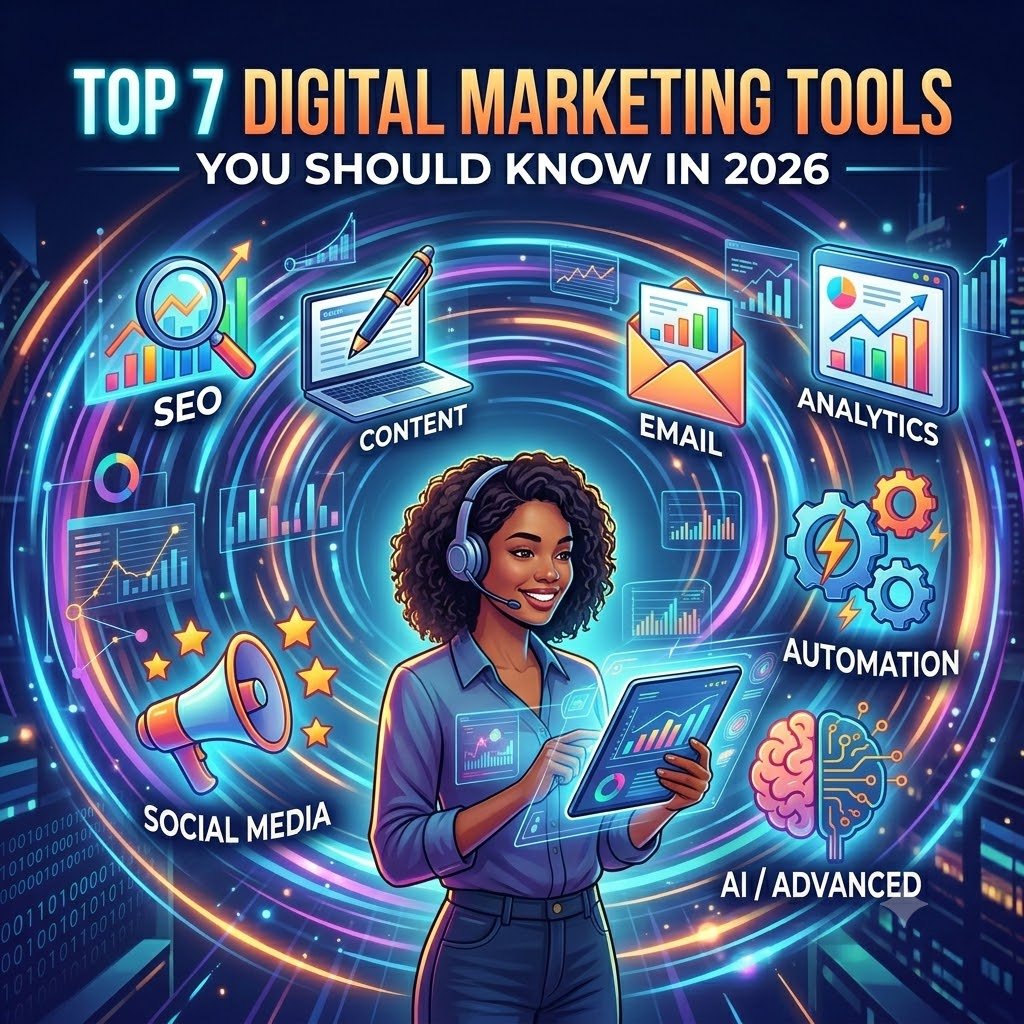
Here are the top 7 digital marketing tools in 2026 that every marketer should know.
1. ChatGPT – Your AI Marketing Assistant – Best Digital Marketing Tools for Beginners
Artificial intelligence has become an essential part of digital marketing, and ChatGPT is leading the way. It helps marketers create content, generate ideas, solve problems, and automate repetitive tasks within minutes.
What you can use it for:
- Writing blog posts
- Creating social media captions
- Generating ad copy
- Email marketing content
- Keyword brainstorming
- Content planning
- Customer support responses
Instead of spending hours creating content from scratch, marketers can use ChatGPT to generate a first draft and then personalize it according to their brand voice.
Best for: Content creators, students, freelancers, agencies, and business
Visual content attracts more attention than plain text. Canva has become one of the easiest tools for creating professional-looking designs without needing graphic design experience.
From Instagram posts to presentations, Canva offers thousands of templates that help marketers create attractive content quickly.
Features include:
- Social media post templates
- Presentation designs
- Flyers and brochures
- Logo creation
- AI-powered image generation
- Video editing
- Brand Kit for consistent branding
Canva is perfect for beginners because of its simple drag-and-drop interface.
Best for: Social media marketers, business owners, and students.
3. Google Analytics 4 (GA4) – Understand Your Website Visitors – 3rd Digital Marketing Tool
If you own a website, knowing how visitors interact with it is extremely important. Google Analytics 4 (GA4) provides detailed insights into website traffic and user behavior.
Instead of simply showing page views, GA4 tracks user actions like button clicks, form submissions, purchases, and engagement across devices.
You can measure:
- Website traffic
- User demographics
- Traffic sources
- Conversion rates
- Customer journeys
- Most visited pages
- Bounce and engagement metrics
These insights help businesses improve their marketing strategies and website performance.
Best for: Website owners, SEO professionals, and marketers.
4. Google Ads – Reach Customers When They Search
Google Ads remains one of the most powerful advertising platforms in 2026. It allows businesses to display ads to people actively searching for products or services.
Unlike traditional advertising, Google Ads targets users with high purchase intent, making it one of the most effective ways to generate leads and sales.
Campaign types include:
- Search Ads
- Display Ads
- Shopping Ads
- Video Ads
- Performance Max Campaigns
- App Promotion Campaigns
With proper keyword research and optimization, businesses can reach the right audience while controlling their advertising budget.
Best for: Businesses looking for leads, sales, or website traffic.
5. Semrush – The Complete SEO Toolkit
SEO continues to play a major role in driving organic traffic. Semrush is one of the most popular SEO platforms used by marketers around the world.
It helps businesses discover the right keywords, analyze competitors, and improve their search engine rankings.
Semrush helps with:
- Keyword research
- Competitor analysis
- Site audits
- Backlink tracking
- Rank monitoring
- Content optimization
- SEO reporting
Rather than guessing what people are searching for, marketers can use real data to build effective SEO strategies.
Best for: SEO specialists, bloggers, agencies, and digital marketers.
6. Meta Ads Manager – Advertise on Facebook and Instagram
With billions of active users, Facebook and Instagram continue to be powerful platforms for businesses. Meta Ads Manager allows marketers to create highly targeted advertising campaigns.
One of its biggest strengths is audience targeting. Businesses can reach users based on age, location, interests, behavior, and even previous interactions with their brand.
Popular campaign objectives:
- Brand Awareness
- Traffic
- Engagement
- Leads
- Sales
- App Promotion
Combined with Meta Pixel, businesses can also track conversions and optimize campaigns for better performance.
Best for: E-commerce businesses, local businesses, and service providers.
7. Notion – Organize Your Marketing Work
Successful marketing requires good planning, and Notion has become one of the most popular productivity tools for teams and individuals.
Instead of using multiple apps for notes, task management, and documentation, Notion brings everything together in one workspace.
You can manage:
- Content calendars
- Marketing campaigns
- Project timelines
- Team collaboration
- Meeting notes
- SOPs (Standard Operating Procedures)
- Client documentation
Many marketing agencies now use Notion as their central hub for managing projects and staying organized.
Best for: Marketing teams, freelancers, and agencies.
Final Thoughts on Digital Marketing Tools You should know
- Digital marketing in 2026 is no longer just about creativity—it’s about working smarter with the right tools. AI, automation, analytics, and data-driven decision-making have become essential skills for every marketer.
- If you’re just starting your digital marketing journey, don’t feel pressured to learn every tool at once. Begin with ChatGPT, Canva, and Google Analytics 4, then gradually explore platforms like Google Ads, Semrush, Meta Ads Manager, and Notion as your skills grow.
- Remember, tools alone won’t guarantee success. What truly makes a difference is understanding your audience, creating valuable content, and continuously learning as digital marketing evolves.
- By mastering these seven tools, you’ll be well-equipped to build effective campaigns, improve productivity, and stay competitive in the ever-changing world of digital marketing.
FAQS
ChatGPT and Canva are excellent starting points because they are easy to use and help with content creation and design.
Yes. Google Analytics 4 offers a free version with powerful website tracking and reporting features.
Semrush is one of the most comprehensive SEO tools for keyword research, competitor analysis, and website optimization.
No. Start with a few essential tools and gradually learn more based on your career goals and marketing needs.
AI can automate many repetitive tasks, but human creativity, strategy, decision-making, and relationship-building remain essential. AI works best as a tool that supports marketers rather than replacing them.